Help keep us running with a $1 donation here
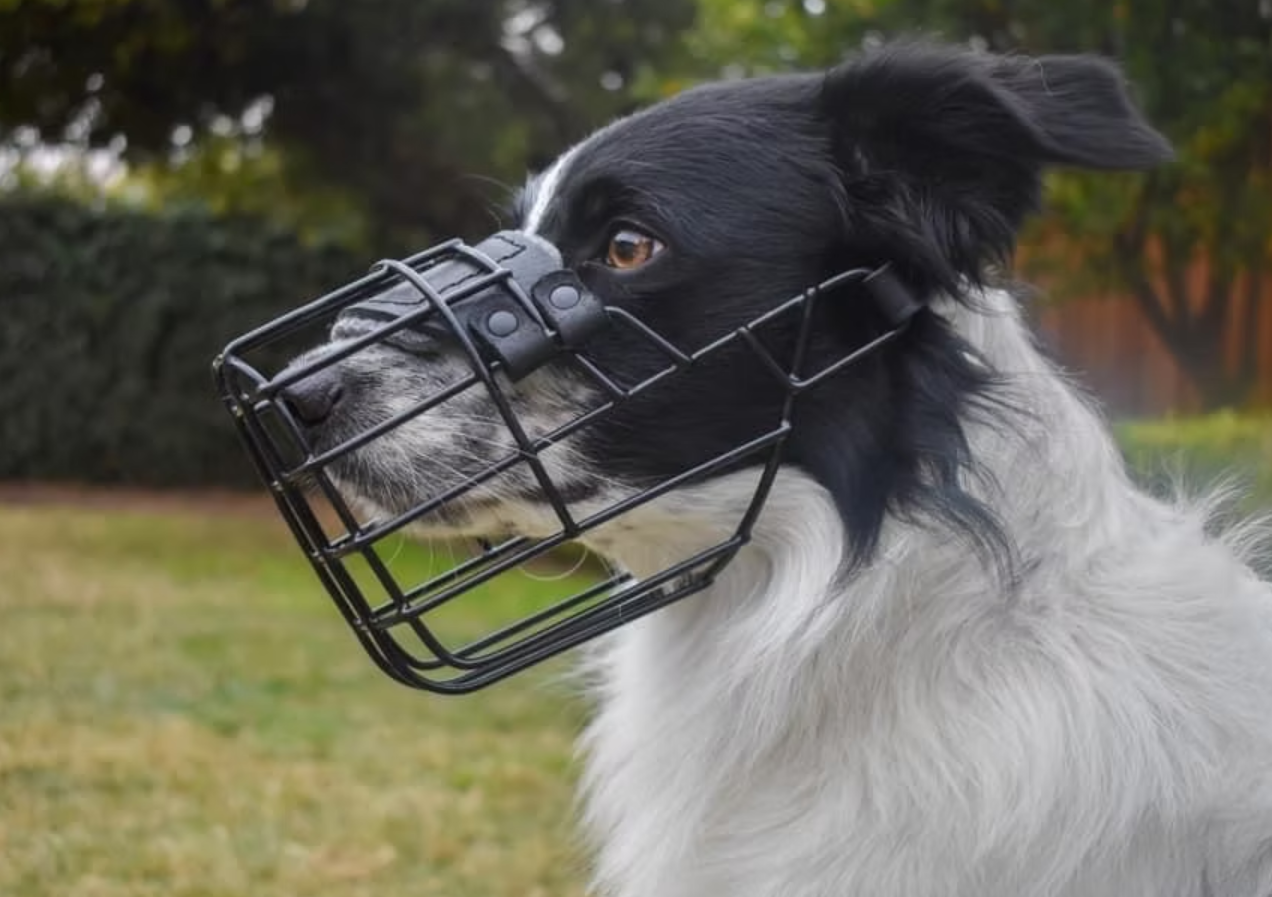
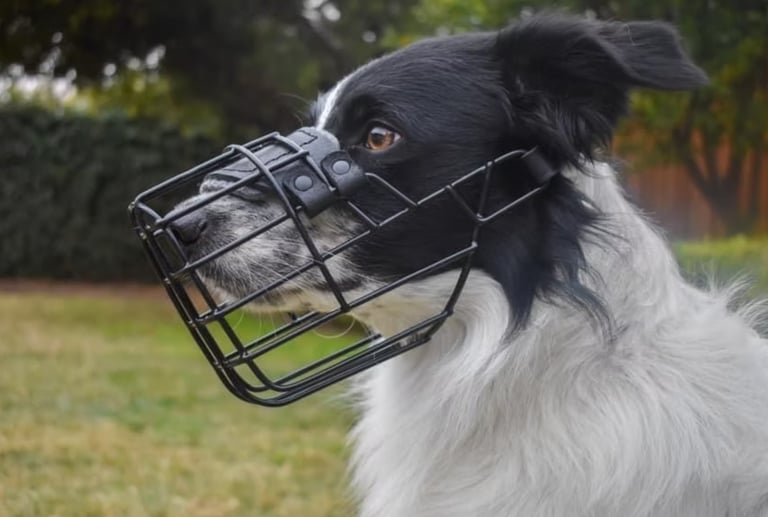
Muzzle Training
Knowing how to muzzle train your dog correctly is essential when keeping it fun and upbeat. If you want to move forward in training, you must go your dog's pace and do what suits them. Every dog is different, so this generalised info should be moulded to fit your dog. Comparing your dog and progress to others is only helpful in finding issues you can fix. Otherwise, you are just putting too much pressure on yourself and your dog.
Before muzzle training make sure you have had its fit checked (or checked yourself) as trying to train or continue training in an ill fit muzzle could cause negative associations.
These steps below are a very brief run down and should be bare minimum. It is quite hard to type out and more in depth videos are below for further questions and information.
1. Present the muzzle
Bring the muzzle in front of your dog without any pressure for them to physically touch it, and give them a lot of treats and praise as they show any calm behaviour. Any positive reactions need positive reinforcements! You should quickly start seeing the dog's excited/positive body language when seeing the muzzle. Muzzle = Reward/fun
2. Interacting with the muzzle
Move the muzzle around as it is in front of the dog, still without any pressure for them to touch it physically. Continue giving them treats and praise whenever they look, sniff, interact with or show any interest in the muzzle. Tips: if the dog doesn’t interact with it, move the muzzle around until they do. Practice this step when you introduce any different muzzle style, and always go back to this for confidence building! Create puzzles/games with the muzzle. You can put their kibble in a bowl and have the muzzle on top of it, or hand feed them the kibble if the muzzle has the availability to do so. (Baskervilles, Jafco with a treat hole)
3. Nose in muzzle
Once your dog is excited to see you bring the muzzle out and will target the muzzle for rewards, you can move on to this step.
Start by holding the muzzle on your lap or out in front of you; without moving the muzzle towards the dog, lure them into the muzzle by rewarding through the front. It would help if you were not moving the muzzle towards your dog; they should be coming to you. You can start to add a command here if you're not sure when you want to. Using a clicker or a verbal marker like 'yes' will be very helpful. Rewarding through the muzzle will help your dog understand that face in the muzzle = reward, not pulling their face out. Once your dog starts to automatically place their face in the muzzle, you can go to the next step.
4. Add Duration
Once your dog can easily do the step before you can move onto adding duration.
You continue luring the dog into the muzzle, but now you create more time in between your rewards; wait 1-2 seconds, then mark your reward, and increase the amount of time by 3-5 seconds each time. (exact time depends on the dog, some will wait for a reward, others have to work their way up gradually). After your dog achieves a good hold/duration in the muzzle, knows the command and is happy to have their face in, you can start introducing the straps in the next step.
5. Doing up the straps
Most dogs usually skip this step and don't have a problem with the straps.
If your dog has problems with the straps, thankfully, this is an easy fix. Just like the gradual muzzle training you’ve done, the same thing should be done with the strap. Work on slowly moving it up and rewarding, then repeating until you can have it rest over the neck and then do it up. To do this step, your dog needs to be able to hold its head in the muzzle for longer durations. If they can’t do that, you should go back and work on it until they can.
6. Final Steps
Once your dog is entirely okay with placing its nose in the muzzle and doing up the straps with duration, you can move on to having them move around, complete commands etc. and even play. Some dogs will be good with sitting still but may go back a few steps when asked to move; just take your time. You need to work on building confidence in the muzzle, as well as just getting used to it.
Doing tricks/commands is a great way to get your dog moving. As well as recalls across the room. You can also scatter feed with the muzzle on so they walk around and pick up food with it (some dogs may not do it). I do NOT recommend doing this with scavengers.
For outside, Most dogs will go straight out/walk with no problems by this stage. However, some go back a few steps when in a new environment, especially if nervous. The best way to do this is to go back a few steps (muzzle training in that environment). Build some confidence, Then gradually work your way back up to moving around In the new environment.
Note: The following steps could take just days to several weeks, depending on your dog's pace. Be sure to take it slow, follow your dog's pace, and do not rush the process.